Journey To My Recovery After My Accident

Just like any other day, I was riding back home after my work. I didn’t know I was about to get into an accident. After the accident happened, I was in unconscious.

After a few months, one day, I woke up from my bed. I saw new scars and my teeth are gone. I don’t remember anything. I went downstairs immediately and looked for my mom. My mom said I had gone through a severe bike accident and I was in coma for 4 months. Then my father came back home after his work. I asked him, “Do you know how my accident happened?” as I was so clueless. Then he told me.

4 months ago, one day, around 3.30am, I was coming back home after work. My workplace is 30 minutes away from my house and it’s quite far. I travel to work by bike to save travel expenses and to miss traffic jams. That morning, there were motorbikes racing on the route that I always use to go back home. That road is very dark, no street lights, no buildings. 2 motorbikes got into accident during the race and not even 5 minutes after their accident, I got into the accident together with them. I went and crashed on the bikes as it was in the middle of the road.

Then, some cars stopped over to give a hand. They saw mine and the rest motorcyclists’ condition, it was worst. I was injured very badly and my body was so bloody. So, they called for ambulance. After the ambulance sent us to the hospital, the people who stopped just now wanted to inform my parents about the accident as I was unconscious. There was a problem. My Identification Card (IC) had my old house address. I moved to a different house a few years back, in the same housing area. After around 1 and half hour, they found my house and informed my parents about the accident.

My family rushed to the hospital immediately. When they saw me in the hospital they all got scared whether I’ll survive or not. I was in critical stage where my life was 3%. My body was full of blood, especially my head. Blood from my head wasn’t stopping. My head was the one that was injured very badly. I had my teeth broke with its bone, my lips got torn, my jaw broke, I had severe brain injury, was in coma, and other minor injuries. After few hours, doctors came and started operation. Before the operation, they said to my dad that they are not sure whether I’ll survive or not because I was very critical.

After the operation, I was still not opening my eyes, not moving. My family were very scared about my condition and they didn’t lose the hope on me. After 5 days, I opened my eye, but still in coma. I started to move my body slowly, but wasn’t able to walk. I was using wheelchair, not sure how long was that. There was a tube on my neck to breathe, and another one in my nose to feed in milk because I was unable to eat for 3 months because I broke my jaw.

I was having hospital check-ups everyday and my dad didn’t go to work for 1 and half month because he had to bring me to the hospital. One of my close friends, Jeffry was helping my family to take care of me. Not only him, his family, my relatives, my father’s friend, my mother’s friend, my friends and some neighbours helped me. But Jeffry was the one who was there all the time. He’ll come in the morning and go back late at night. He was doing this everyday and he didn’t miss one day to come to my house. I’m really thankful for him.

Then one day, somewhere in July, I woke up from my bed. I went to the bathroom to brush teeth and I saw new scars on my face and my teeth broken. I was like, “What happened to me?” I asked myself. Then I asked the same question to my dad and my mom. They said that I had a severe accident, the whole story from the accident until my recovery.

But I wasn’t recovered 100% yet. There were surgical plates, tube on my neck to breathe, and importantly my brain not yet recovered. I was unable to think properly, was forgetful, couldn’t give attention on something, shortly couldn’t use my brain well. Because of this I couldn’t do anything. I was still going for check-ups in hospital, physiotherapy an occupational therapy. The check-up was once a week and I felt it is slow recovery.

After 10 months of the accident, I went back to college. I’m studying Bachelors. It was very hard for me to give attention in class, to study. I was going to a medical centre for doctor’s consultation. I told the doctor my problem, my difficulties with my brain. The doctor referred me to a doctor from rehabilitation hospital, Regen Hospital.
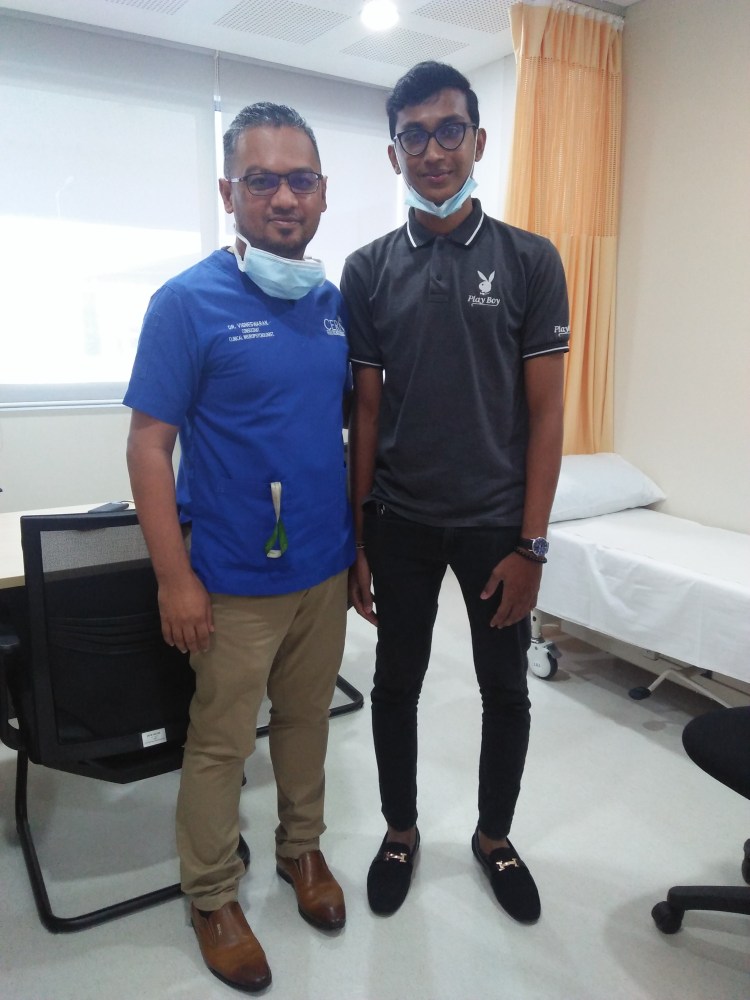
Dr Vignes and myself

I went to the rehabilitation hospital and met the doctor, Dr. Vignes. The first time I went there, he observed me, assessed the problems with my brain. He asked me to bring my dad next time. Then the next time, he told my dad that I have to undergo cognitive remediation / rehabilitation therapy, for 10 weeks with him, 3 days per week. He was explaining the changes in my brain if he does this therapy. My father agreed to him and told me I have to undergo 10-week therapy with Dr. Vignes. I said yes.

Then I started to go to the therapy with him. During the therapy I couldn’t feel any changes. I was just following his instructions. After 9 weeks, I finished my therapy with him and now I feel really fine, recovered. The changes in my brain since the Day 1 of the therapy and the last day of the therapy was a great extent, very obvious. Now I could think properly, not forgetful, can remember things, could pay attention, I felt my brain is now fine.

‘No matter how impossible your circumstances may seem to be, there’s always hope for a better day’
When Staying Down Is Not An Option

(Picture is for illustrative purposes only . I do not own the copyright of this image. Photo credit: Google)

Angeline Toh (not real name) is a loving mother and wife, who also happened to be a successful entrepreneur in her 50s. She is best known for her market acumen, financial prowess, and excellent operational skills. She along with her partner owned a business that has lasted over 20 years while carefully raising their kids into responsible, peace loving, wonderful humans. Life has been beautiful, stable, uninterrupted.

This however abruptly changed when she was diagnosed with breast cancer in 2015 and a year later with a brain metastasis. Hit by such a whirlwind, she underwent a brain surgery to remove the the cancerous tissues, followed by adjuvant chemo and radiotherapies. A year later, while recovering from the first surgery and making some good progress physically, she landed herself again at the hospital’s emergency department, presenting with right sided hemiparesis (weakness) and seizure. An emergency radiological investigation revealed a recurrent mass in the adjacent parieto-occipital region and required yet another live saving surgery.

Post-operatively, she developed a rare form of speech disorder called conduction aphasia where the patient experience prominent impairment with repetition, some degree of anomia (word finding difficulty) and somewhat functional comprehension]. As if her life hasn’t been hard hit enough, along with the aphasia, Angeline developed signs of yet another rare form of neurological disorder known as Gerstmann Syndrome, a condition where patients would exhibit four cardinal cognitive symptoms : i) agraphia – loss of ability to express themselves through writing; ii) acalculia – loss of ability to perform simple calculations or arithmetics; iii) finger agnosia -inability to recognise their own fingers or others; and iv) left and right disorientation – difficulty to distinguish the left or right side of one’s body.

While administering both neuropsychological and aphasia assessments over a period of time (to establish her cognitive strengths, deficits and the severity of the impairments), I couldn’t help but to notice her courageous spirit, resilience and immense hope. She would try her level best to respond to all stimuli as accurately as possible, and when she fails, she would outrightly refuse to give up, and insist on trying until she got it right. Despite the aforementioned deficits and limitations, Angeline has always always been motivated to overcome these hurdles and find her final path towards the elusive recovery. An epitome of unbreakable spirit, she refuses to give up in what may appear to be a bleak lonely future. I pray that she will emerge victorious in this journey, one day at a time.

(The name, age and other personal identifiers of the patient is altered to protect patient identity and not to breach the privacy and confidentiality).

My Journey: A Tribute to My Gurus

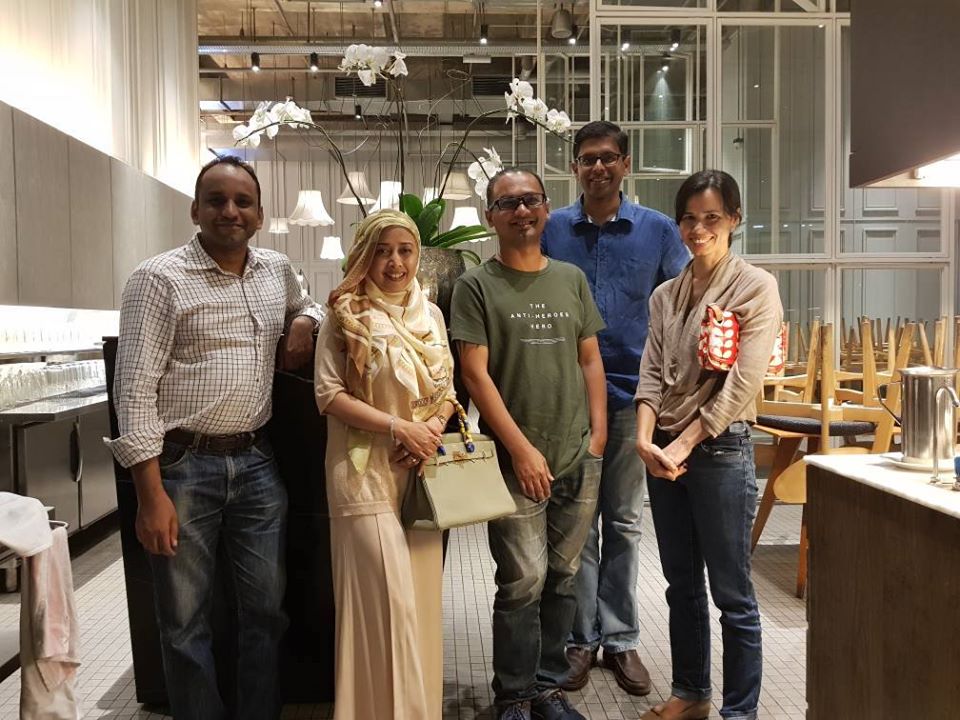
From Left to Right: Assoc. Prof Vairavan Narayanan, Prof Norlisah Ramli, myself, Prof Dharmendra Ganesan and Assoc. Prof. Dr Azlina Ahmad Annuar.

It has been almost 9 years (2011 to be exact) since the day I first walked into the operating theatre of my doctoral supervisor, Prof Dharmendra Ganesan, a pediatric neurosurgeon, who gave me a quick theoretical introduction to neuropathology, brain anatomy, radiological key points and the neurosurgical approach to be employed in his surgery. I remember being so awestricken by what I saw in the operating theatre that day (besides a pulsating physical brain). He was a clinician who had an in depth understanding of the disease, its nature and chronological course. His anatomical knowledge was phenomenal and his surgical finesse were second to none. He knew the anatomical landmarks very well, and resected the delicate brain tissues with extreme care and focus, but relatively at ease. He was my Wilder Penfield (as Penfield was to Brenda Milner – the empress of modern day clinical neuropsychology). Unbeknownst to him, at that moment, I made a personal vow and aspired to be just like him (as a safe clinician and being a great one at it). I realised that the journey would lasts a lifetime.

(Wilder Penfield in 1913 , original photo By United States National Library of Medicine – https://collections.nlm.nih.gov/catalog/nlm:nlmuid-101426096-img, Public Domain, https://commons.wikimedia.org/w/index.php?curid=75916291)

A couple of months into my clinical internship, my other clinical supervisors came onboard. It began with Assoc. Prof. Dr Vairavan Narayanan, a distinguished neuro-oncology, epilepsy and skull base neurosurgeon. I met him for the first time during the usual morning grand rounds. I saw him standing across the on-call room inside the Neuro ICU ward, appearing calm and collected. Something about him gave the aura that he is a warm kindred. He was that all suited up, neat looking, quaint young professor who had just returned from Cambridge. After our initial exchange of pleasantries, inquisitive academic conversation started and the journey began. Over the next 5 years during the course of my doctorate, he started refining and moulding my character both as an academic and a clinician. He was a refreshing fountain of goodwill and limitless knowledge . A tough Guru that he is, his reprimands and rebukes, changed my clinical worldview and continues to guide my conscience in my clinical practise to this day. I learned great amount of humility, empathy and ethics required of a clinician through him while dealing with patients with diverse neurological or neurosurgical disorders. Dr Vairavan was also central in introducing me to the world of neuropsychological neurosurgery, presurgical planning and intraoperative brain mapping. He was the person who kick-started the complex-multidisciplinary awake brain surgery service in University of Malaya back in 2014, which in turn, inspired me to push the boundaries of clinical neuropsychology in Malaysia (alongside my other neuropsychology comrades).

Next to come on board was Professor Dr. Norlisah Ramli, an eminent Malaysian Neuroradiologist. She was a mentor and my “Master Yoda”, who taught me everything that I know and understand about neuroimaging today. Her small physical stature belies her vast insights and expertise in neuradiology, that would command utmost respect and reverence from peers and foes alike. With hundreds of publications and thousands of citations, she is one of the most knowledgeable and well informed clinician scientist that I have come across. Thanks to her guiding nature, my professional view of neuroimaging has evolved and grew over the years. She nurtured and shaped my understanding of advanced imaging modalities including diffusion tensor imaging, spectroscopy and functional MRI (fMRI). Looking back, as a clinical neuropsychologist, I do believe that a good understanding of brain imaging modalities and its interpretation makes a significant difference in how you diagnose, treat and manage your patients safely and responsibly.

Lastly, Prof Mark William Bondi, a world-renowned clinical neuropsychologist and a world authority in the field of neurodegenerative disease and traumatic brain injury. I was introduced to his eminent self by Dr Pollyana Casmar (whom I met during an APA Conference in Hawaii). His calm and humble demeanour with a gentle guiding nature has always had a long lasting impact on me, and guides the way I supervise and train my clinical interns. Personally, I would liken Prof Mark Bondi to an old grand master that one will always revere, knowing that he will always be there to lead and guide you throughout your clinical journey. I remember the day I met him for the first time at the VA Hospital, University of California San Diego. An eminent figure with a very humbling gentle appearance. His expertise in the broad area of clinical neuropsychology, neuroimaging, psychiatry, genetics, neurodegenerative conditions and brain injury continues to inspire and motivate, even years after my doctoral training.

(My two other doctoral advisors and collaborators were Assoc. Prof. Dr Lisa Delano-Wood and Assoc. Prof. Dr. Azlina Ahmad Annuar for whom I have a lot of respect and admiration for. I would write about my journey with them and my Master’s supervisor, Assoc. Prof. Dr Azlina Mohd Kosnin on a separate post).

Welcome Note

” …I was impressed, as no one could fail to be, by the experience of being present in the gallery of the operating room while Penfield stimulated the exposed cortex in awake patients…” (Brenda Milner, 1998)

Welcome to the Diaries of a Tattooed Neuropsychologist – Journey into the World of the Human Mind. My name is Dr Vigneswaran Veeramuthu @ Dr Vic , a clinical neuropsychologist of Malaysian origin, residing in the city of Kuala Lumpur, Malaysia. I am also an adequately published clinician scientist specialising into areas of traumatic brain injury, disorders of consciousness, advanced neuroimaging and cognitive mapping in brain tumour/glioma surgeries.

In this blog, I would like to share my learnings, struggles, hopes, insights as a clinician, patient stories and heartbreaks experienced during the course of treating both adult and paediatric patients with various forms of neuropsychological disorders arising from central nervous system (CNS) related pathologies (predominantly the brain). Additionally, this blog would also feature occasionally guest writers who are clinicians or neuroscientists themselves. The list of other guest writers would also include some of my patients and their caregivers who’d probably share their journey with the disease, for others to see and learn from.

The topics in this blog would be a broad range of areas including fundamentals of neuropsychology, neuroscience, neuroanatomy, neurological conditions, diagnostic assessments and testings, treatment options, clinical and clinician dilemmas, common diagnostic errors and mistakes, vicarious trauma for clinicians, patient-doctor/ clinician relationship, terminal conditions and death, caregivers burnouts, amongst others. I hope to raise more awareness and understanding in relation to the field of clinical neuropsychology as well as to stoke general interest in understanding the brain and its function.

Please do feel free to leave some suggestions or recommendations with regards to what you hope to see or read on this blog. Thank you.

Diaries of a Tattooed Neuropsychologist -Journeys into the World of the Human Mind